
 Edgar de Wit
Month-end reporting places consistent pressure on Education, Healthcare, and Nonprofit organisations. Reporting requirements are often extensive, organisational structures evolve over time, and resources are typically limited. As a result, the month-end cycle frequently depends on manual effort and informal workarounds rather than a repeatable process.
In practice, unpredictability rarely appears overnight. Reporting structures grow gradually, spreadsheets are extended to answer new questions, and adjustments are made as regulations or funding models change. What starts as a workable solution slowly becomes harder to maintain and more difficult to repeat with confidence each month.
In many organisations, reporting still relies on Excel-based workflows that depend heavily on individual knowledge. Files are updated manually, calculations are adjusted per period, and report structures differ slightly between entities or departments. Over time, this leads to recurring rework and growing dependency on a small number of people who understand how everything fits together.
When organisational changes occur—such as new entities, revised cost structures, or additional reporting requirements—these workflows become increasingly fragile. Each change requires new design decisions, extra checks, and more manual intervention. Establishing a stable month-end rhythm becomes difficult.
XLReporting’s reporting templates provide a structured foundation for recurring reporting. Templates capture report layouts, KPIs, and calculation logic in a reusable format that can be applied consistently across periods and entities. This removes the need to redesign reporting structures every month.
Templates also help distribute knowledge. Instead of relying on individual experience, reporting logic becomes part of the model itself. This improves continuity and makes reporting easier to manage over time. For teams struggling with recurring month-end pressure, templates often form the first step toward a predictable month-end process
XLReporting templates are built around a deliberate balance between standardisation and flexibility:
This approach provides a consistent starting point while preserving flexibility where it adds value. Standardisation reduces repetitive setup work and creates a stable baseline for further refinement. Many templates are also used by implementation partners, reinforcing their role as practice-based standards rather than theoretical models.
Reporting templates in XLReporting follow a structure that aligns closely with standard Excel practices. Reports are separated from data, while data is organised using combined keys such as period, entity, and account.
Report headers include selection fields for period and entity, with optional dimensions such as cost centre. Data retrieval is automated using logic comparable to Excel functions like XLOOKUP. This enables a single report to work across multiple periods and entities without rebuilding formulas or layouts.
Many reporting templates originate in specific sectors and are later reused in similar contexts:
Used by Dutch educational institutions to calculate funding and staffing requirements based on programmes or tariff rules. The model supports multiple cost centres and provides clear insight into staffing capacity.

Designed to show how costs from planning models are allocated across departments. Allocation logic is translated into a clear overview that supports both reporting and internal analysis.
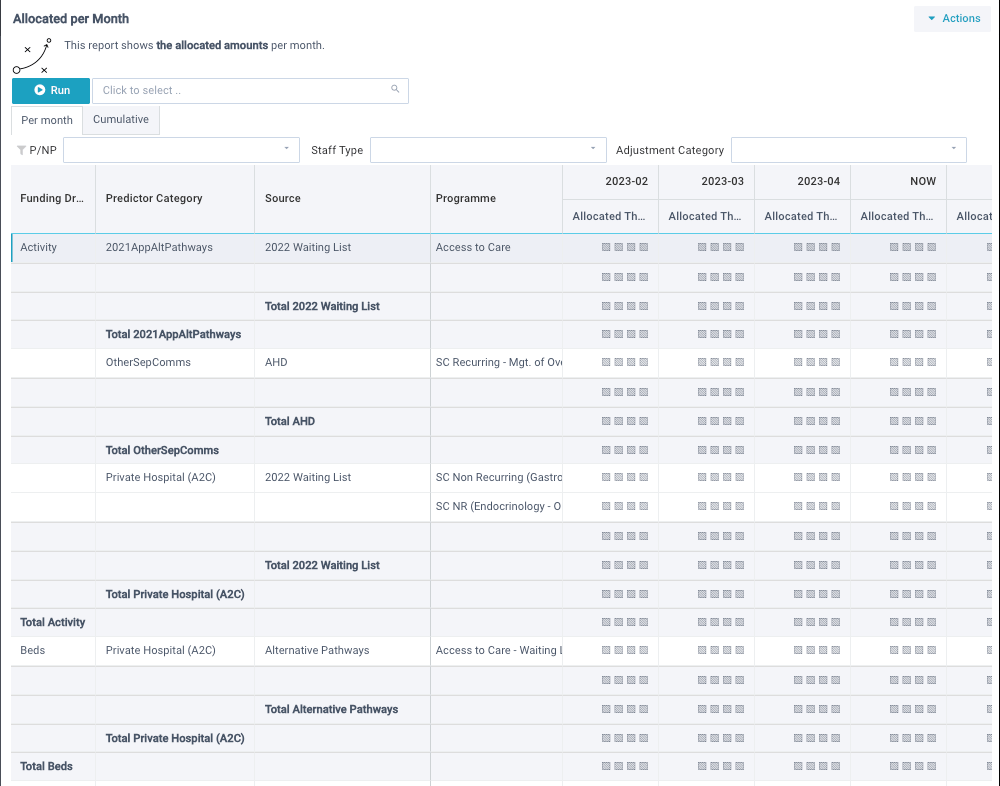
Additional public examples can be found on the XLReporting showcases page.
A predictable month-end cycle depends on consistent structures, reduced manual effort, and reporting logic that remains stable as organisations evolve. Reporting templates support this by limiting repeated design decisions and providing a clear framework for recurring reporting.
The result is a reporting process that is easier to manage, easier to scale, and easier to repeat. Combined with automation and controlled workflows, templates form a practical foundation for faster and more reliable month-end closes.
To see how this works in practice, explore the XLReporting demo and discover how smart standards and flexibility come together in one reporting platform.
Back to the listSchedule a Meeting with one of our Planning and Reporting Experts.
Let's TalkXLReporting is an online Planning and Reporting Platform to create reports, budgets and forecasts the way you want.


© 2009-2026 XLReporting
® All rights reserved
